Insured shipping and personal delivery available across Europe

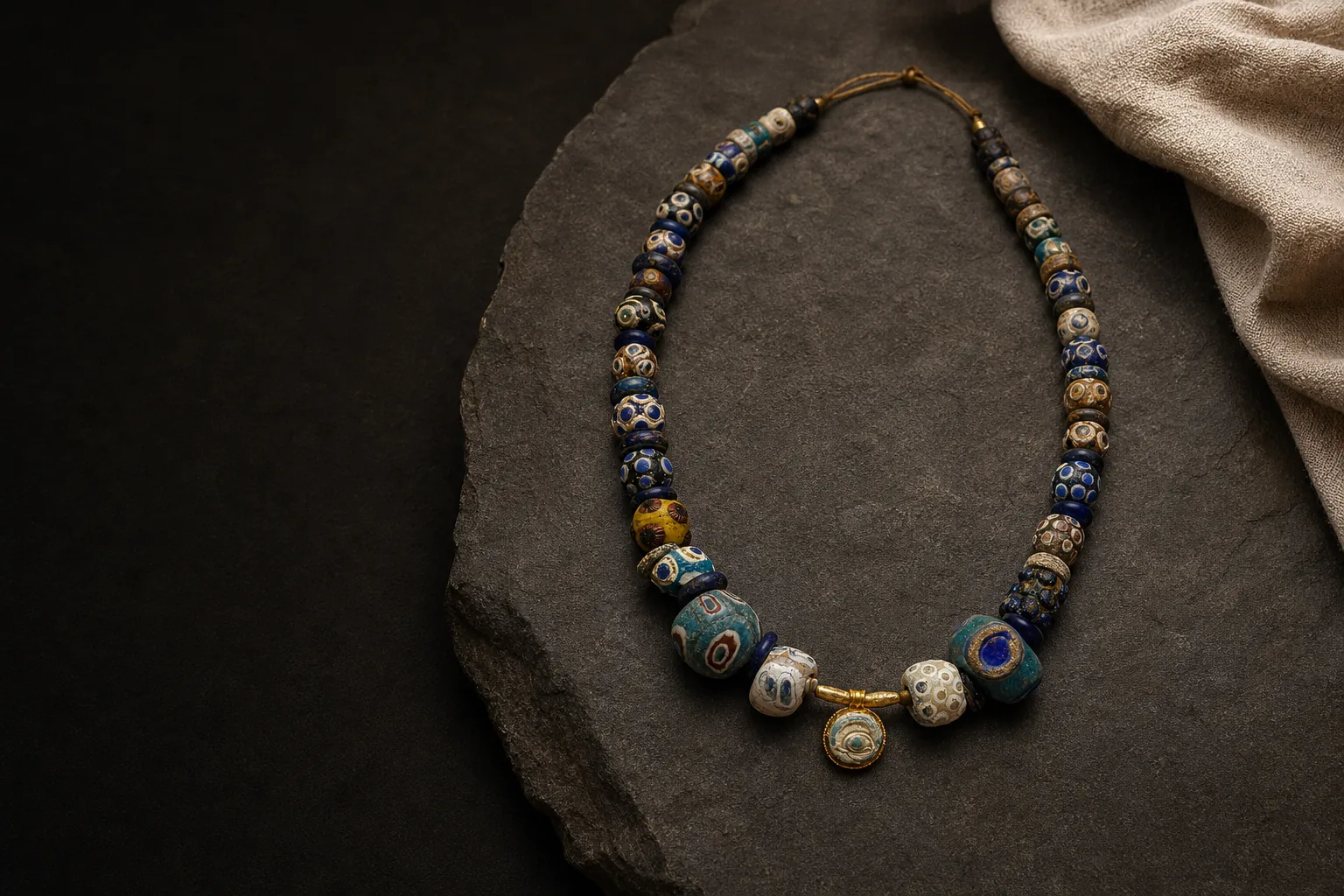
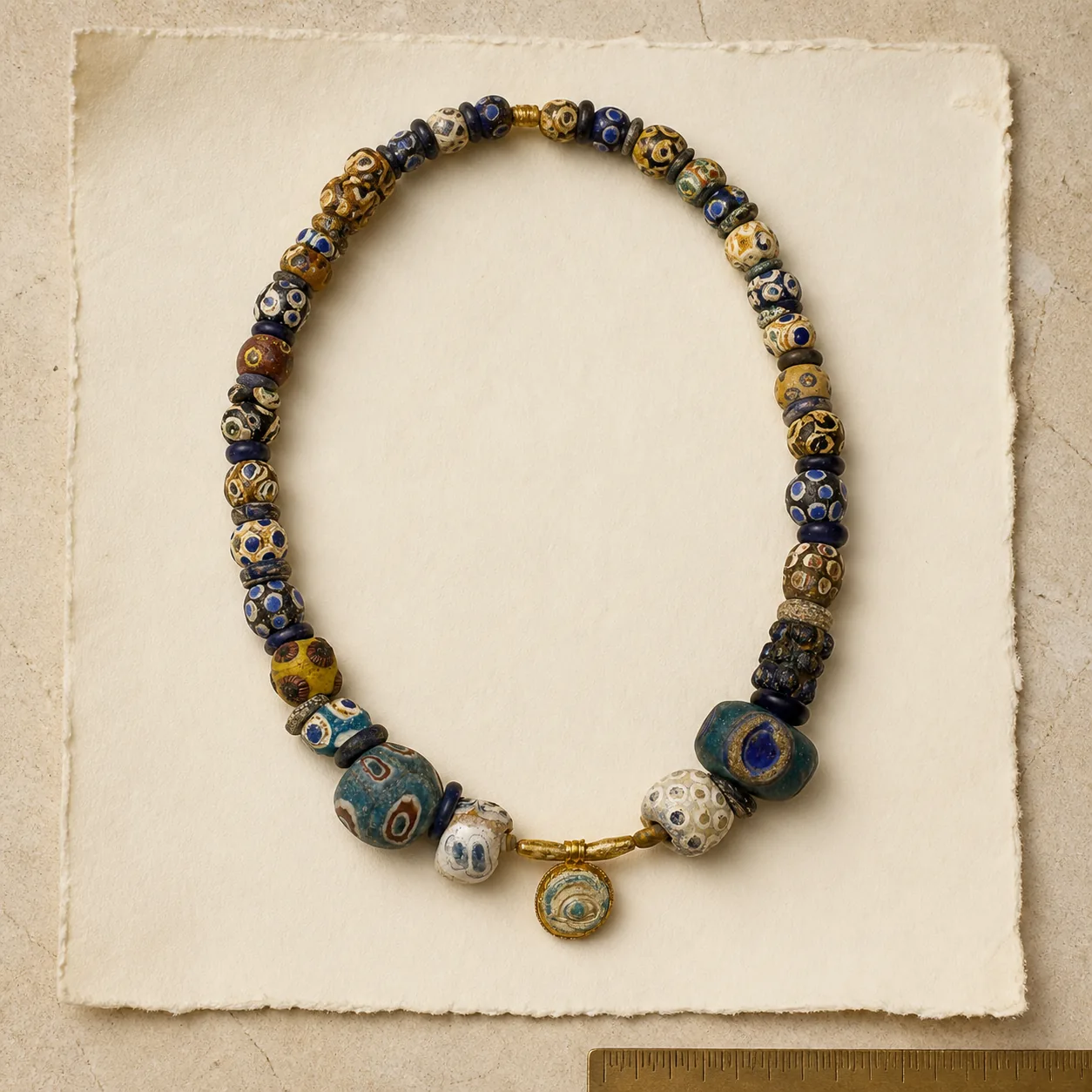
Phoenician polychrome eye-bead necklace arranged on dark stone
Phoenicia · 6th–5th century BC

Every eye still returns the gaze.

Discover the piece
Reference AN · PH · 0003Available

Phoenician Eye Necklace

Rod-formed elements carrying concentric white, blue and dark eyes, assembled around a single gold-framed centre. The motif repeats element after element and settles at the centre of the strand.

€6,800CHF 6,450 VAT included

Complimentary 24-hour reservation · Personal assistance

Date
6th–5th century BC
Culture
Phoenician
Material
The eye and gold
Composition
Polychrome eyes
Length
26 cm
Condition
Excellent · stated

Included with the piece

  • Individual certificate of authenticity
  • Condition report and conservation guidance
  • Atelier Numen signature presentation box
  • Door-to-door insured shipping
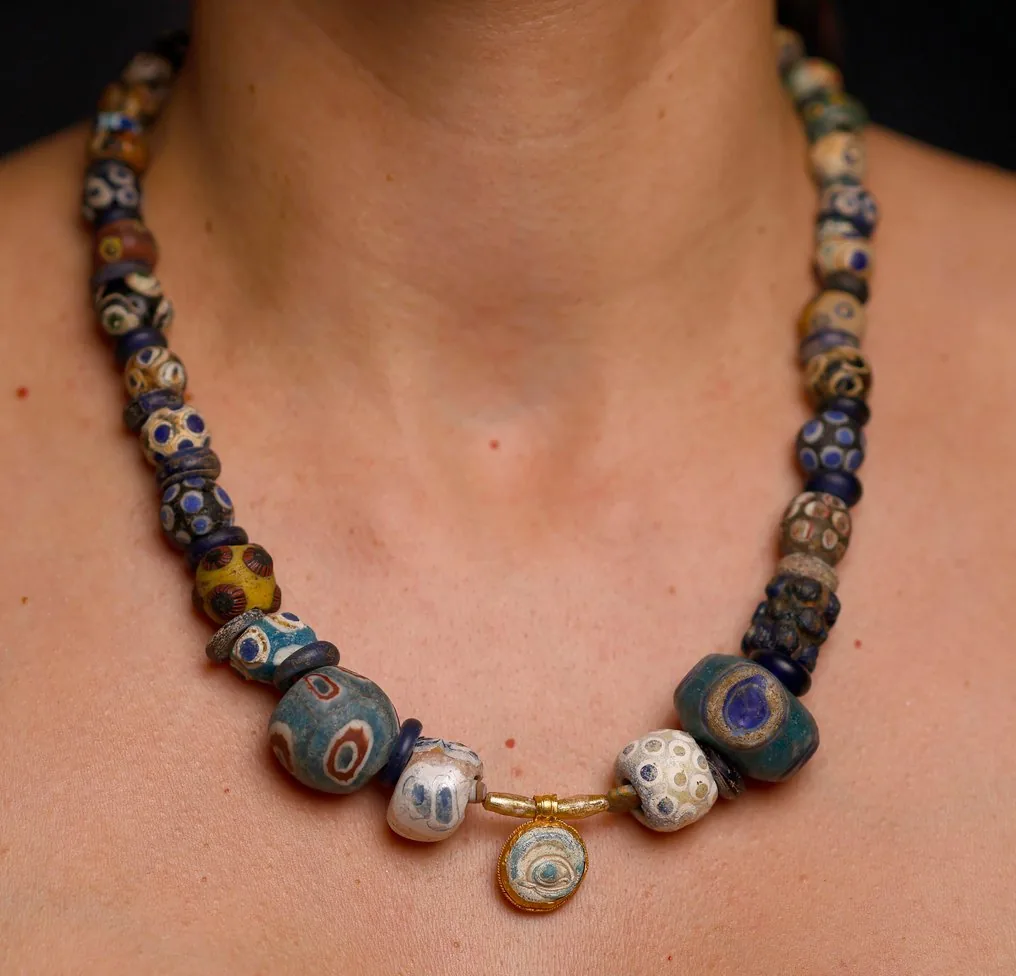
Phoenician eye-bead necklace worn against the skin
True scale · 26 cm

Designed for the body

An ancient sign, worn close.

At twenty-six centimetres the strand sits high on the throat, where the eyes read one after another and the gold centre falls at the hollow. The ancient elements are held on a modern thread with a modern clasp.

26 cmLength
2 cmWidth
Gold-framed eyeCentre

The wearer

The eye was worn facing outward.

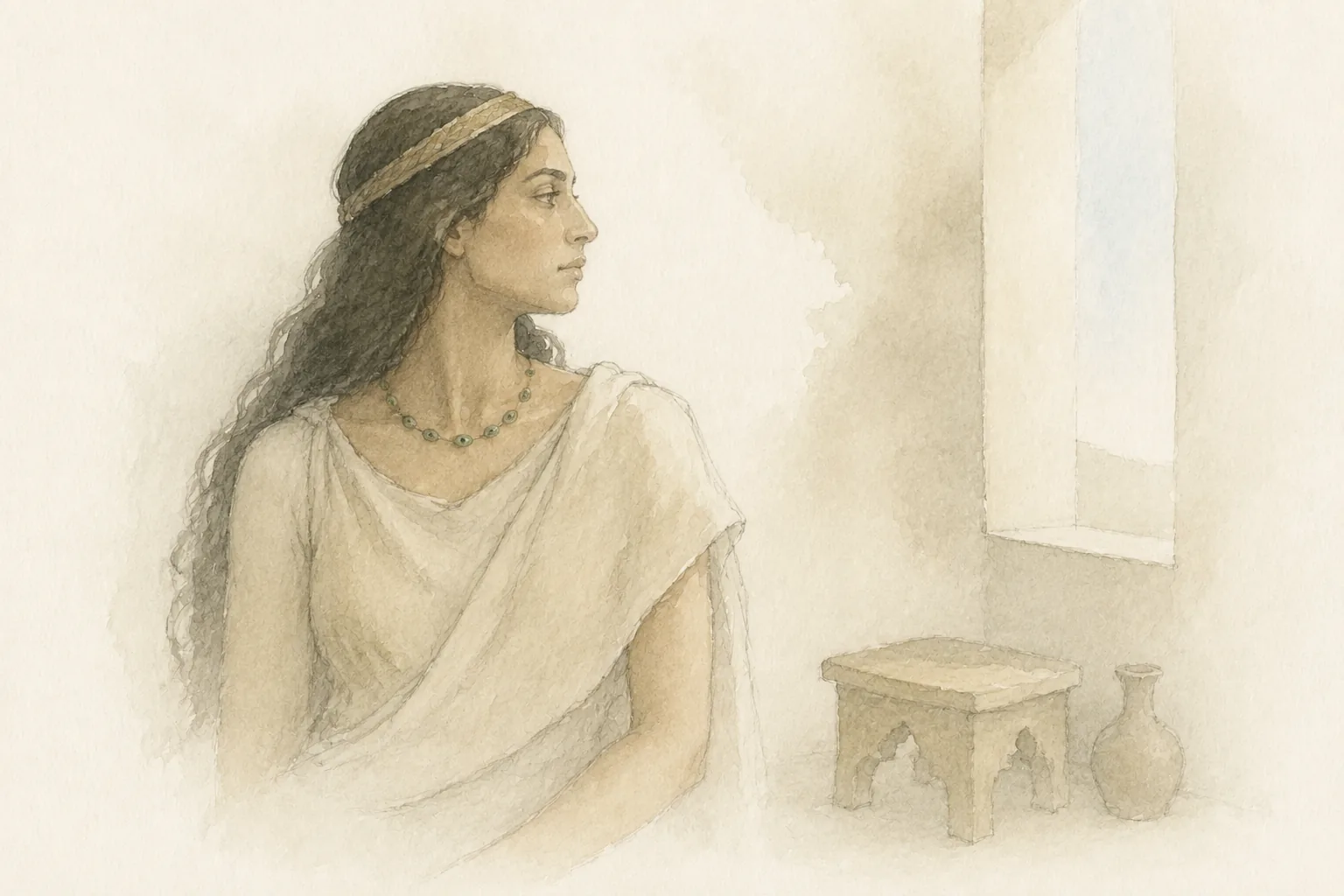
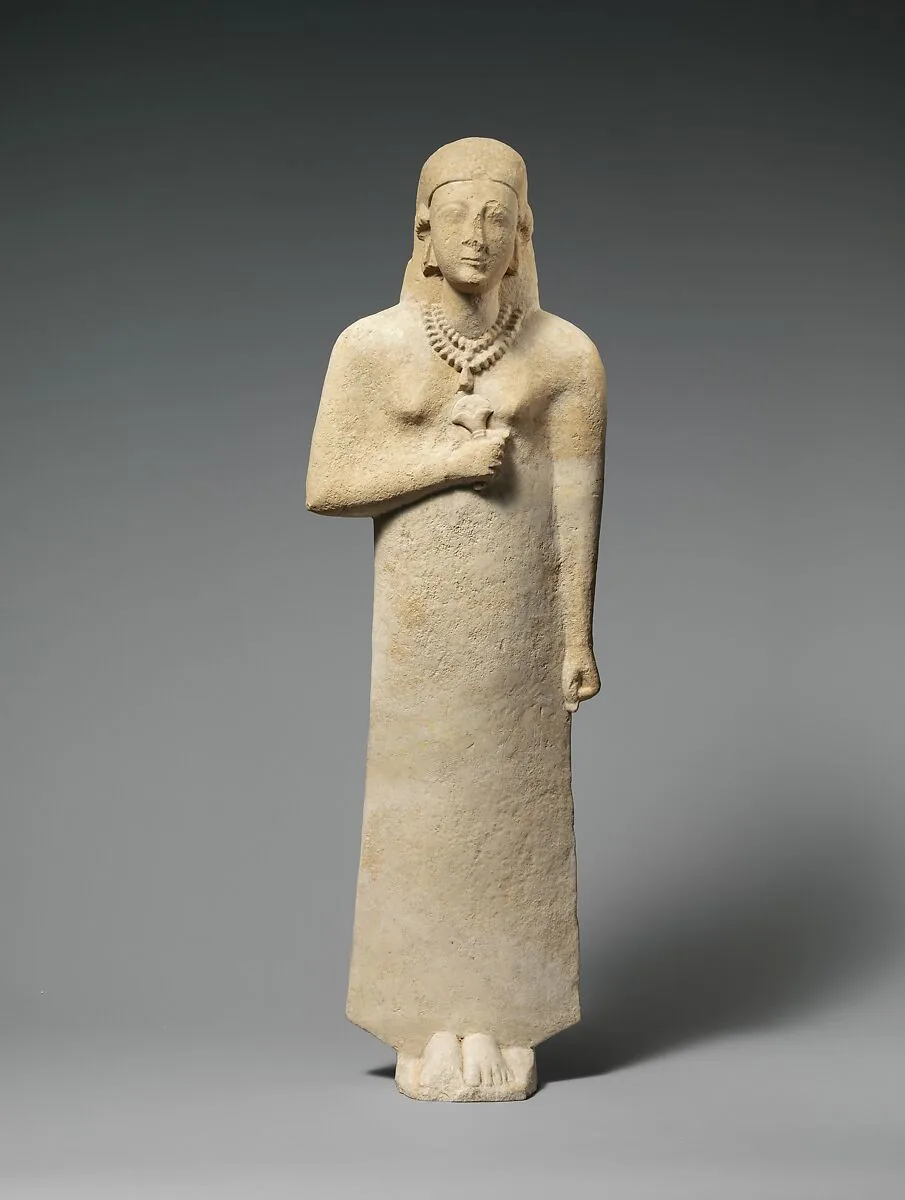
The plate reconstructs how the eyes sat on the body. The comparative statue was carved in the same century, and the museum’s record singles out the jewellery she wears.

Pencil and watercolour reconstruction of a Sidonian woman of high standing wearing green glass eye beads in a palace room
House plate · The wearer, Phoenician Mediterranean, 6th century BC · Commissioned reconstruction, and a record of how a necklace of this kind was worn rather than of this object
Cypriot Archaic limestone statue of a woman wearing two necklaces, Metropolitan Museum of Art
Comparative object · Limestone statue of a woman · Cypriot, Archaic, early 6th century BC · Limestone, H. 76.2 cm · The Met 74.51.2541 · The Cesnola Collection · Public Domain

Carved in Cyprus in the early sixth century BC, the century of this necklace. The museum’s record singles out her jewellery: two necklaces, and ear caps with two pendants hanging from them. She holds the position these eyes were made for. That published record belongs to the museum object; this necklace carries its own passport.

Read the museum record ↗

Material · The eye and gold

The eye was built ring by ring.

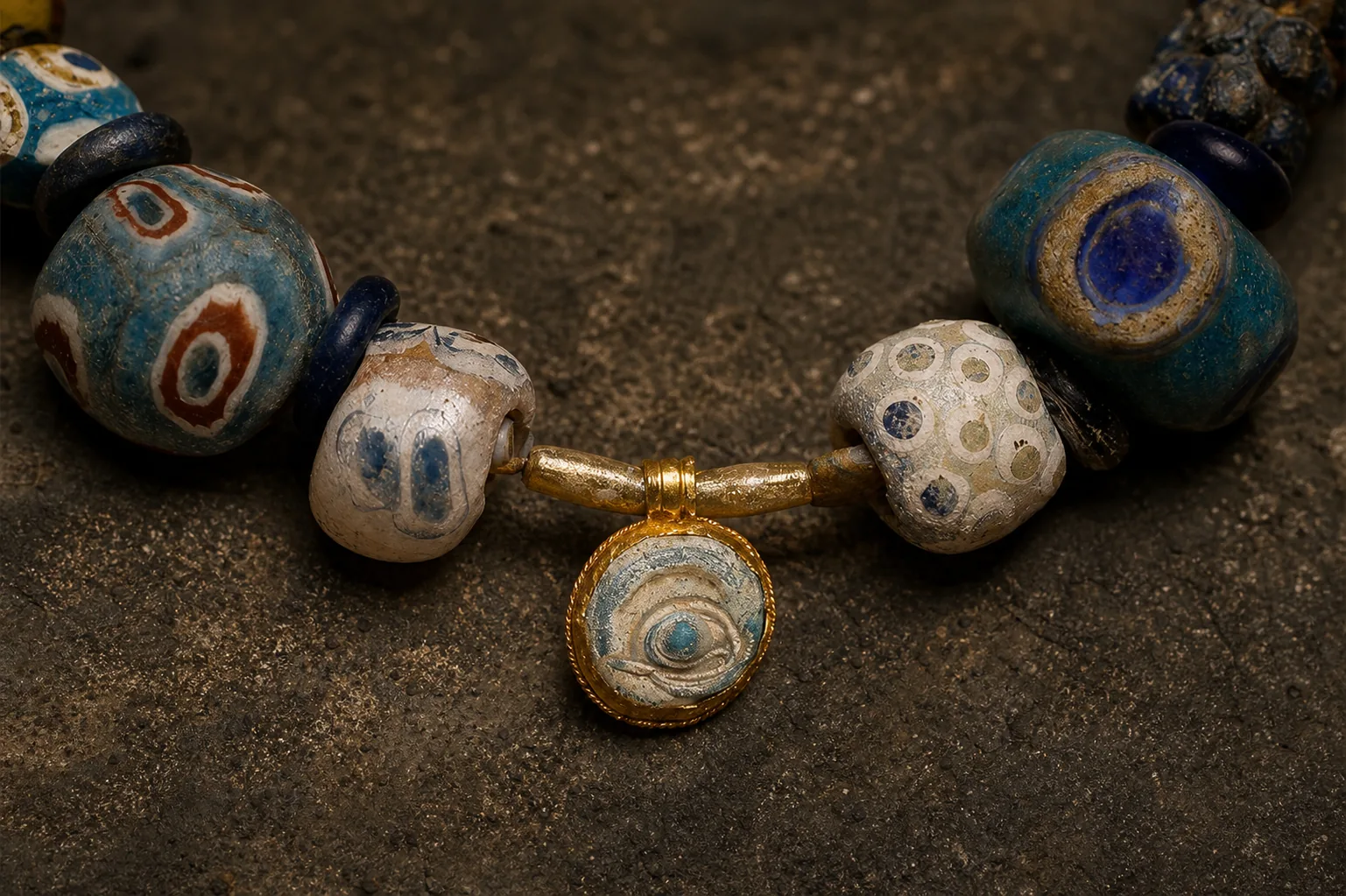
The workshop formed each element around a heated core, then trailed contrasting rings concentrically around a pupil. Every colour demanded its own control of heat and viscosity. The central eye received a gold frame and remains the visual hinge of the assembly.

Rod-formedTechnique
Gold frameCentre
Magnified surface of the concentric Phoenician glass eyes
Move the cursor to exploreMagnified surface · editorial detail

The wearer

A sign made to be seen.

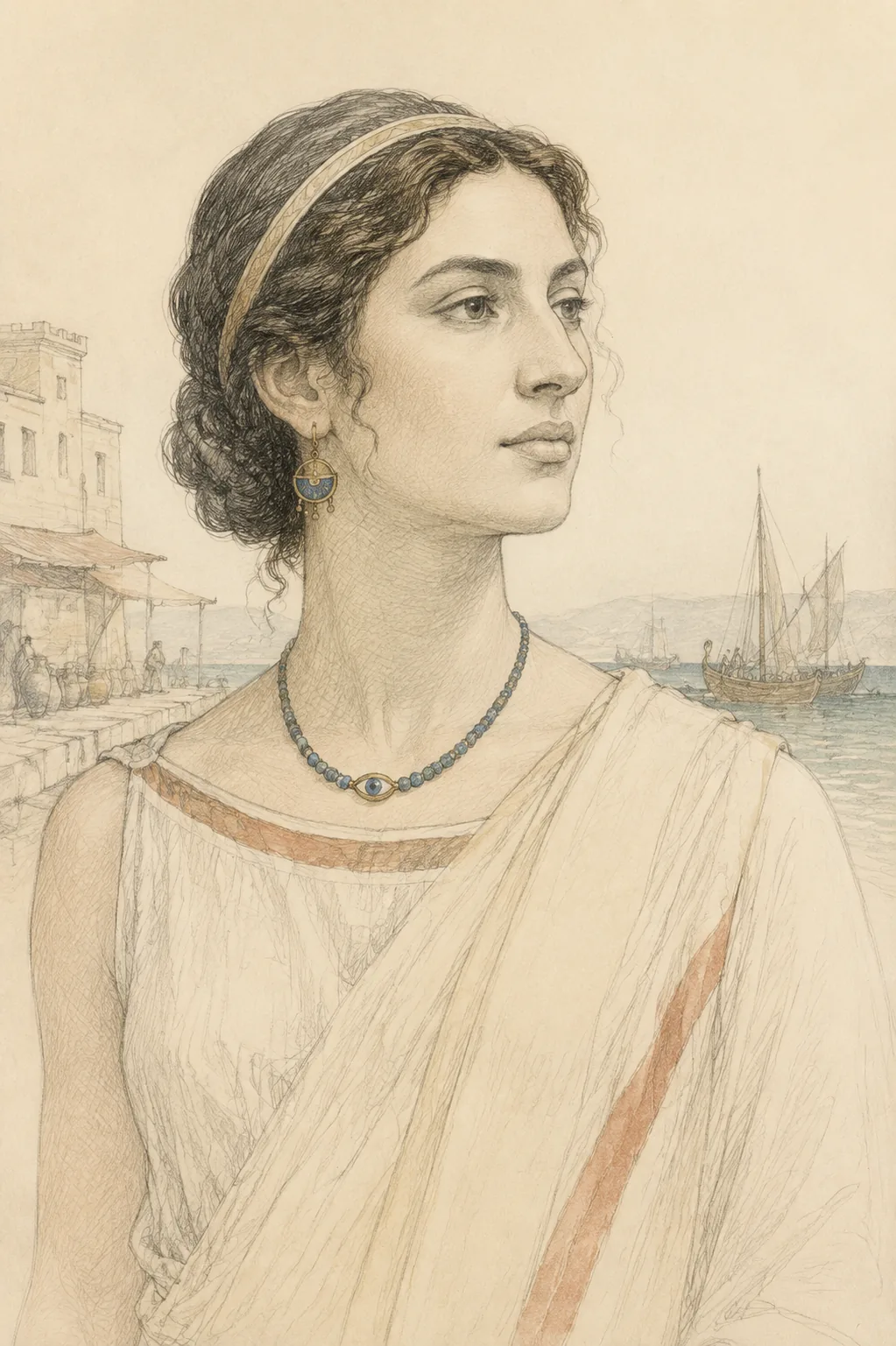
A commissioned reconstruction of how such a strand sat in a Phoenician port city. The eye was apotropaic: a form made to meet the gaze and turn harm away. The plate places the custom; the object record stays with the necklace.

Pencil and watercolour reconstruction of a woman in a Phoenician port wearing an eye-bead necklace
House plate · Phoenician port, 6th–5th century BC · Commissioned reconstruction, not a record of this object
II

A work from the period

One sign, repeated until it held the strand.

Phoenician workshops used the eye as a protective sign, and repeated it until the motif itself held the strand together. The construction stays visible on the surface of every element.

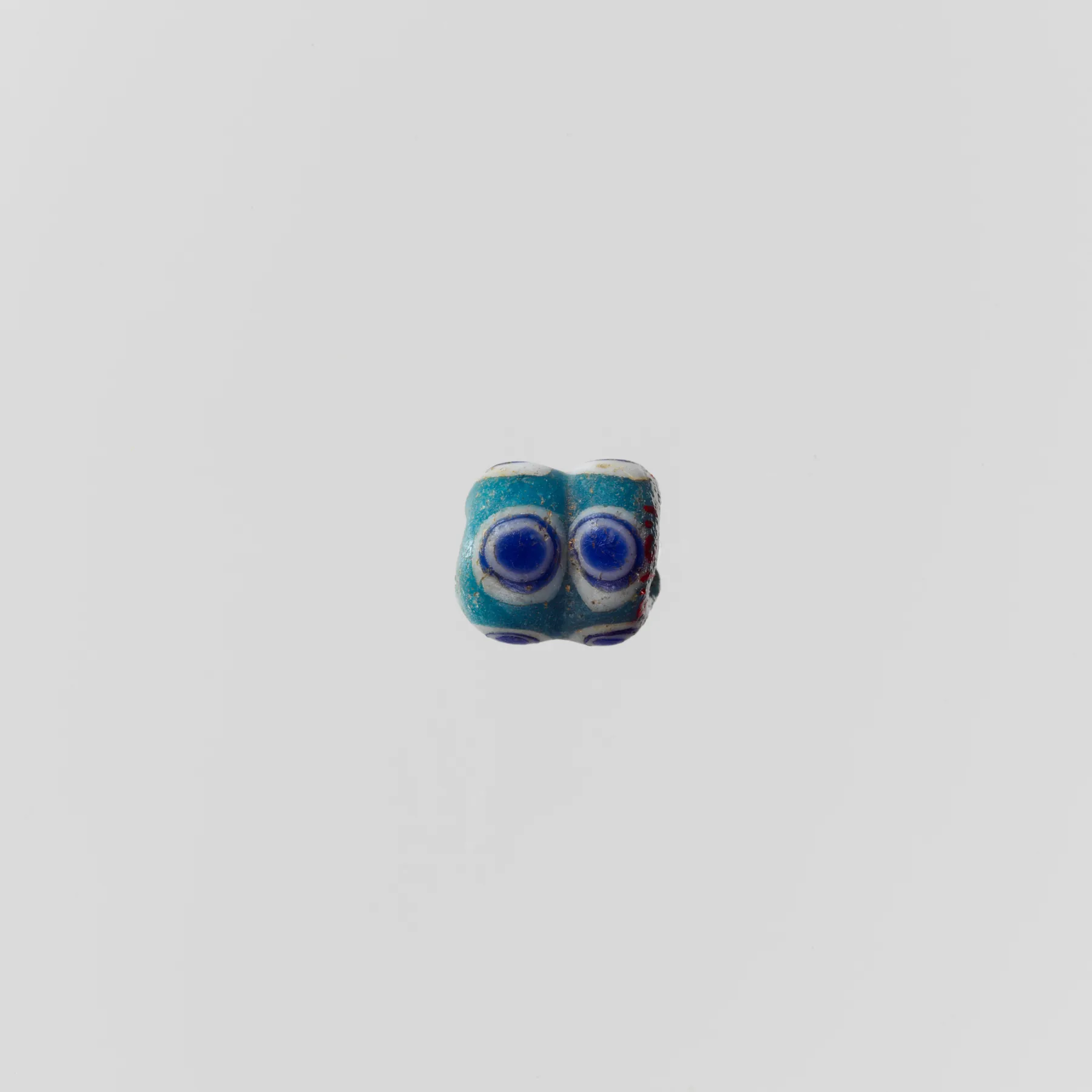
The Metropolitan Museum preserves a Phoenician, Cypriot eye dated from the sixth to the fourth century BC. It is rod-formed and trailed, and its double-eye pattern records the same family of work. That published record belongs to the museum object; this necklace carries its own passport.

Phoenician Cypriot glass eye bead in the Metropolitan Museum of Art
Comparative object · Glass eye bead · Phoenician, Cypriot, 6th–4th century BC · The Met 74.51.3 · Public Domain

The scale of time

These eyes were trailed twenty-five centuries ago.

500 BC

The eyes are formed and strung

332 BC

Tyre falls to Alexander

146 BC

Carthage is destroyed

1972

The recorded ownership begins

Today

The piece enters its next chapter

The Phoenician Mediterranean

A chain of ports faced one sea.

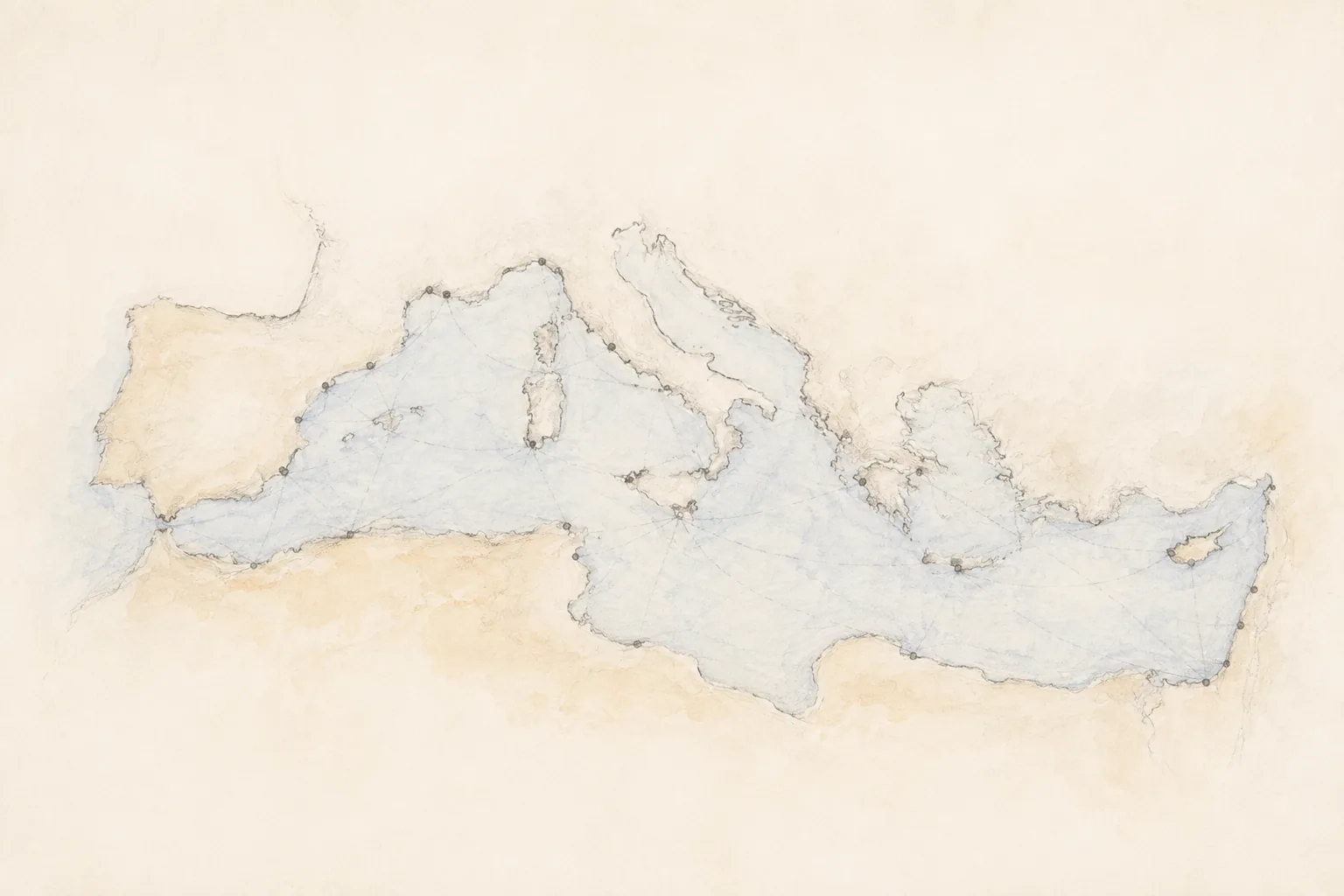
Tyre, Sidon and Byblos kept distinct civic identities while their ships carried the work west through Cyprus, North Africa, Sicily and Iberia. The map establishes the field of exchange; the object record stays anchored to the necklace.

6th–5th c. BCCatalogue range
1972 · SpainRecorded since
Restrained pencil and watercolour map of the Phoenician Mediterranean Tyre Carthage Gadir

Historical context map · Attribution rests on typology and technique; the documented ownership of this necklace begins in a Spanish private collection in 1972.

Provenance · The complete record

Trust, recorded in full.

The value of an ancient object rests on evidence, clear attribution and the precise limits of its surviving record.

Established

  • The rod-formed and trailed construction is consistent with Phoenician polychrome work of the sixth to fifth centuries BC.
  • The strand survives as one assembly, with a gold-framed eye at its centre.
  • The piece entered a Spanish private collection in 1972, where the recorded modern provenance begins.
  • The source record states culture, period, materials, measurements, condition and a certificate of authenticity.
  • The elements and pendant are ancient; the thread and clasp are contemporary.

The surviving record

  • The findspot is unrecorded.
  • No workshop or city can be named for these elements specifically.
  • The record before 1972 has not survived.

Every gap remains visible in the dossier. Clarity protects the object and its next custodian.

Physical archive · Included

The object record

Every object enters the Numen Archive with its own illustrated record: photography, material description, provenance, condition and permanent number.

Atelier Numen · ArchiveObject record
Series 03 · Phoenicia
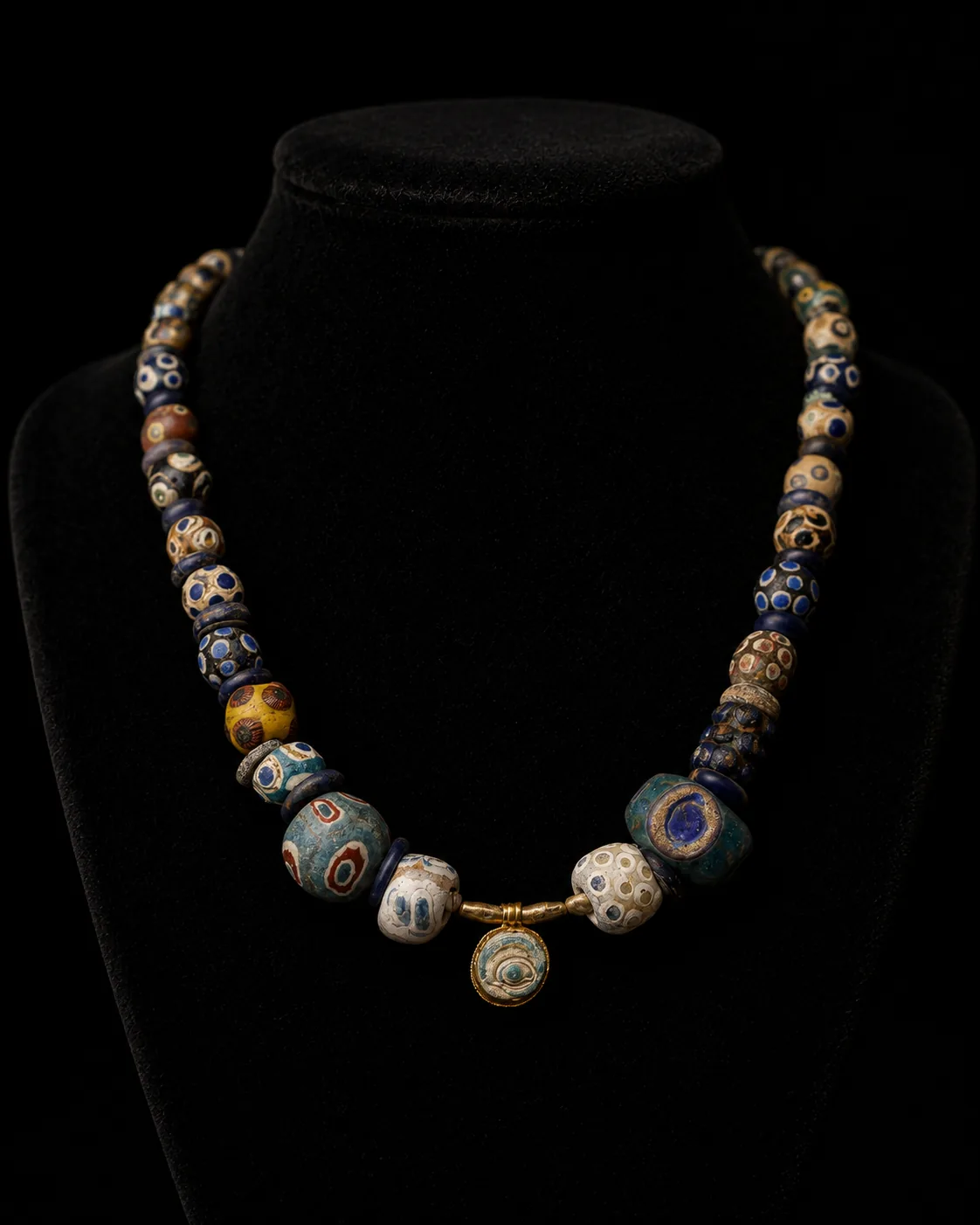
Phoenician necklace on a black bust within the archive record
Authenticity verified
Object
Necklace
Origin
Phoenicia
Period
Achaemenid Levant
Date
6th–5th century BC
Material
The eye and gold
Measure
26 × 2 cm
Record
AN · PH · 0003
Individual edition · 01/01Permanent house archive

Lifetime authenticity

The piece arrives with an individual certificate and a return guarantee should its authenticity ever be questioned.

Secure custody

Conservation-grade packing, insured transport and personal oversight through delivery.

Continued care

Keep the necklace flat on soft cloth, away from cleaning products, sudden changes in humidity and prolonged direct sunlight. The modern clasp supports occasional wear with measured handling.

The house presentation · Included

A signature box, worthy of its contents.

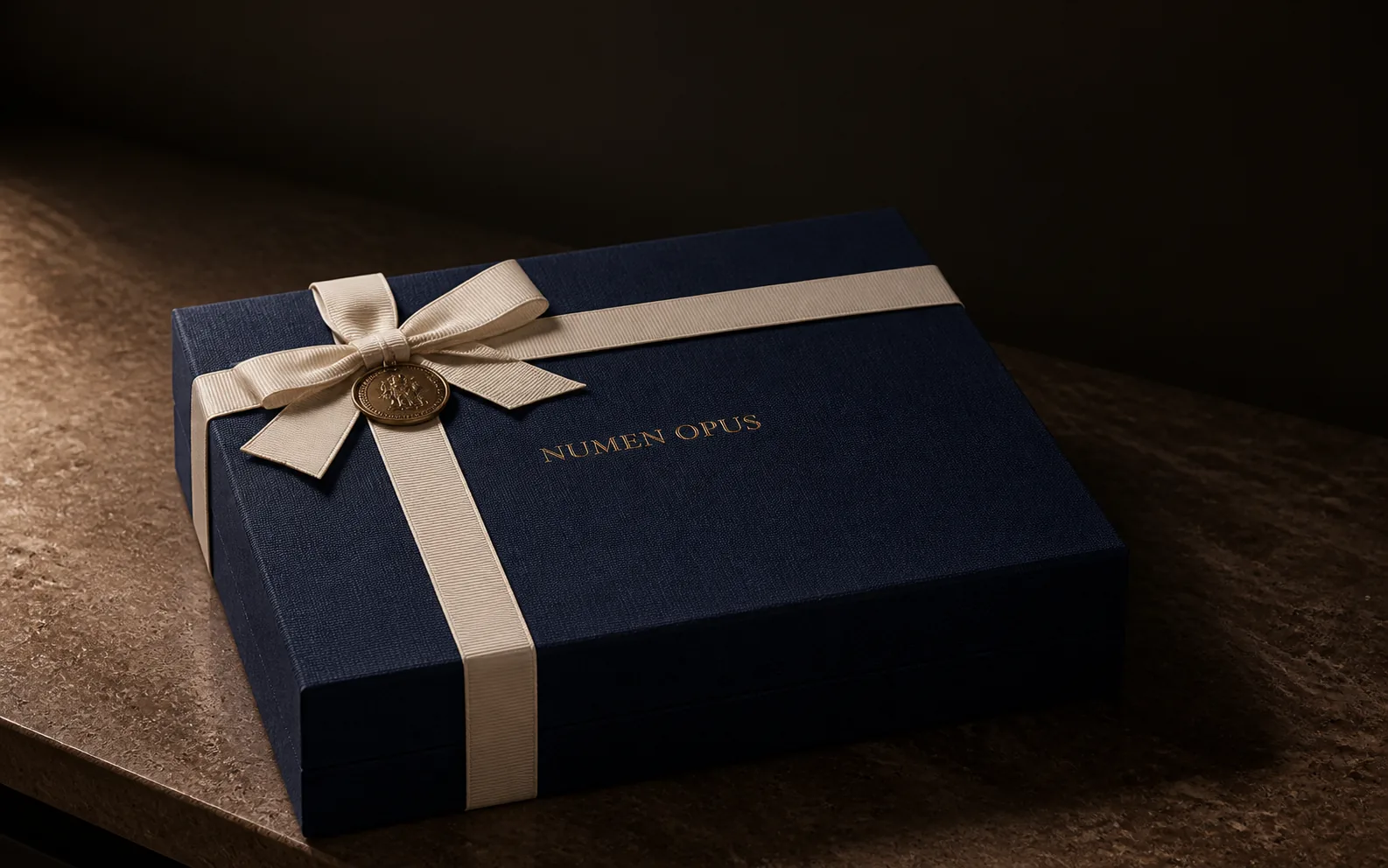
Every Atelier Numen piece arrives as a gift in the house’s midnight-blue presentation box, tied by hand with an ivory grosgrain ribbon.

Closed midnight-blue Atelier Numen presentation box with ivory ribbon
The Atelier Numen boxMidnight-blue bookbinding cloth · ivory grosgrain ribbon · antique-gold signature · protective inner case
House signatureA permanent design shared by every piece in the Atelier Numen collection.
Gift presentationClosed, ribboned by hand and ready to be given.
Protected withinA conservation-grade inner case is fitted to the object’s exact geometry.
Personal deliveryAvailable by appointment, or insured shipping with direct oversight.

Before deciding

Questions, answered clearly

Are the elements ancient if the thread is modern?

Yes. Organic threads perish while the ancient material survives. Restringing is established practice for giving ancient material a stable contemporary assembly, and the archive record always separates ancient material from contemporary assembly.

Can I wear the necklace?

Yes, with care. Keep it dry, put it on after perfume and cosmetics, and store it flat in darkness on a soft support.

Is it legal to own and to export?

The piece is registered under Spanish Historical Heritage Law 16/1985 and the sale is notified as required before completion. Export outside the EU needs a prior authorisation, which we help you obtain.

How is the date reached?

By typology and technique. The rod-formed body, the trailed concentric eyes and the gold frame are consistent with Phoenician work of the sixth to fifth centuries BC. No excavation record exists for this necklace, and the dossier says so.

What exactly will I receive?

The piece, its individual certificate, the technical and condition record, conservation guidance, archive photography and the Atelier Numen presentation box. Every detail is confirmed with you before shipping.

One piece · one custodian

Twenty-five centuries. The next chapter is yours.

The reservation is complimentary and holds the piece for twenty-four hours. We respond personally, with the complete dossier.

The Arrivals

The next object is already being examined.

Pieces are found one at a time, and only the intact ones are catalogued. Subscribers see each arrival first, with its record, its condition and its price.

Phoenician Eye NecklaceAN · PH · 0003 · Available
€6,800CHF 6,450 · VAT included
Phoenician Eye Necklace
Phoenician city-states · AN · PH · 0003

Private reservation · 24 hours

Let us discuss the piece.

Leave your details and a specialist will contact you personally. The reservation carries no charge.

Personal response · Discreet service · Complimentary hold

The piece is reserved.

Thank you. We have recorded your request and will contact you personally with the dossier and answers to any questions.