Julio-Claudian rule
Augustus founded the first imperial house. Claudius began the harbour at Portus, tying imperial power to the sea routes that carried vitrum across the empire.
 Atelier Numen
Collections · 01
A Roman 1st century A.D. vitrum centrepiece, and the 18k gold ring built around it.
$975Made to order · two weeks · duties not included
Images are illustrative: each piece is built around its own ancient element, so no two are alike.
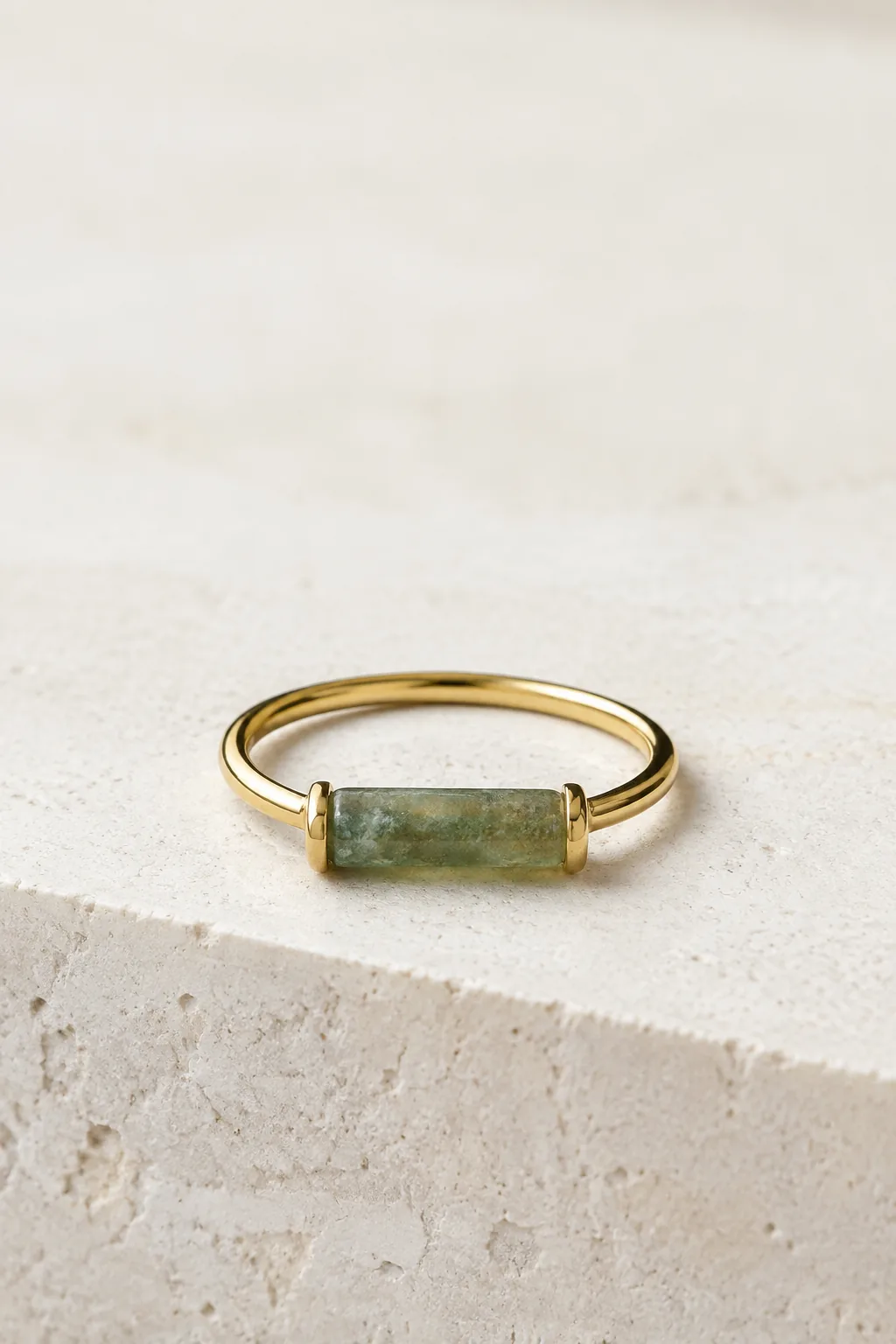
The construction
The gold holds it, and stops. Three entries go into the record, so that what is ancient and what is ours never blur.
One piece, 1st century A.D. Material, date, measurement, condition and provenance are documented before anything is built around it.
Two 18k retainers, one at each end. Nothing across the middle. The vitrum stays visible front and back.
The band is drawn to the chosen piece, not the piece fitted to a band. No two come out the same.
The product, annotated
A watercolour study makes the distinction visible at a glance: the Roman element remains itself; the gold ring is made for it now.
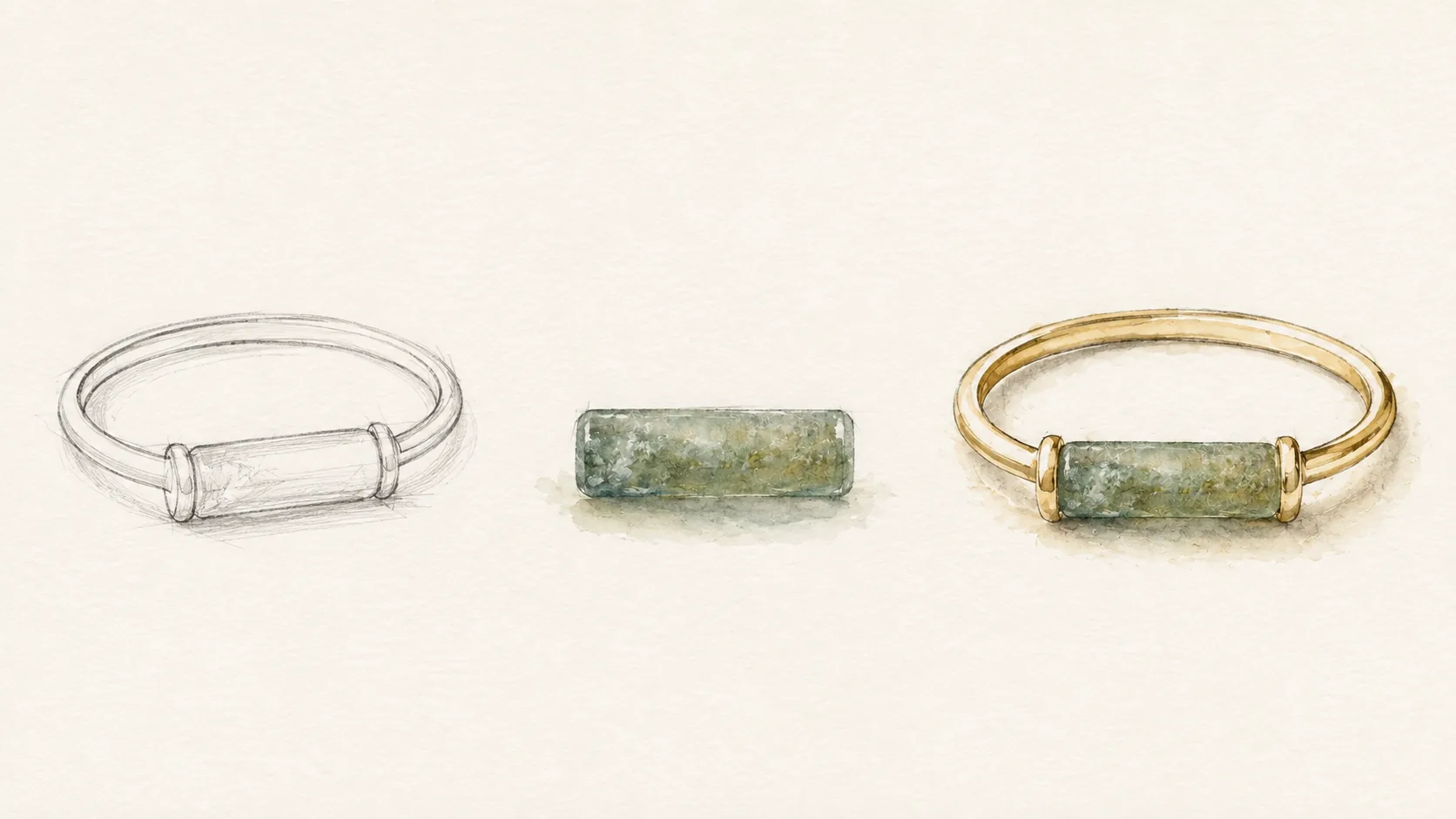
From the drawing board
Proportion is settled before the vitrum is chosen: where it sits, how far the gold reaches, how much of it is deliberately left uncovered.
The measurement arrives with the order, and everything after it follows from that number. Paper stays blank until the hand is known.
Each ancient vitrum carries its own dimensions, a millimetre apart from the next. The one that suits the size goes to the bench, so the proportion between the vitrum and the finger it sits on is settled before a line is drawn.
The vitrum is measured and traced at scale: the reach of the two retainers, the height they stand at, the curve where the gold meets the ancient face.
Eighteen carat, worked around the chosen element and closed to the chosen size. Band and vitrum leave the bench as one object.
Chosen for one hand. Drawn for one element. Built once.
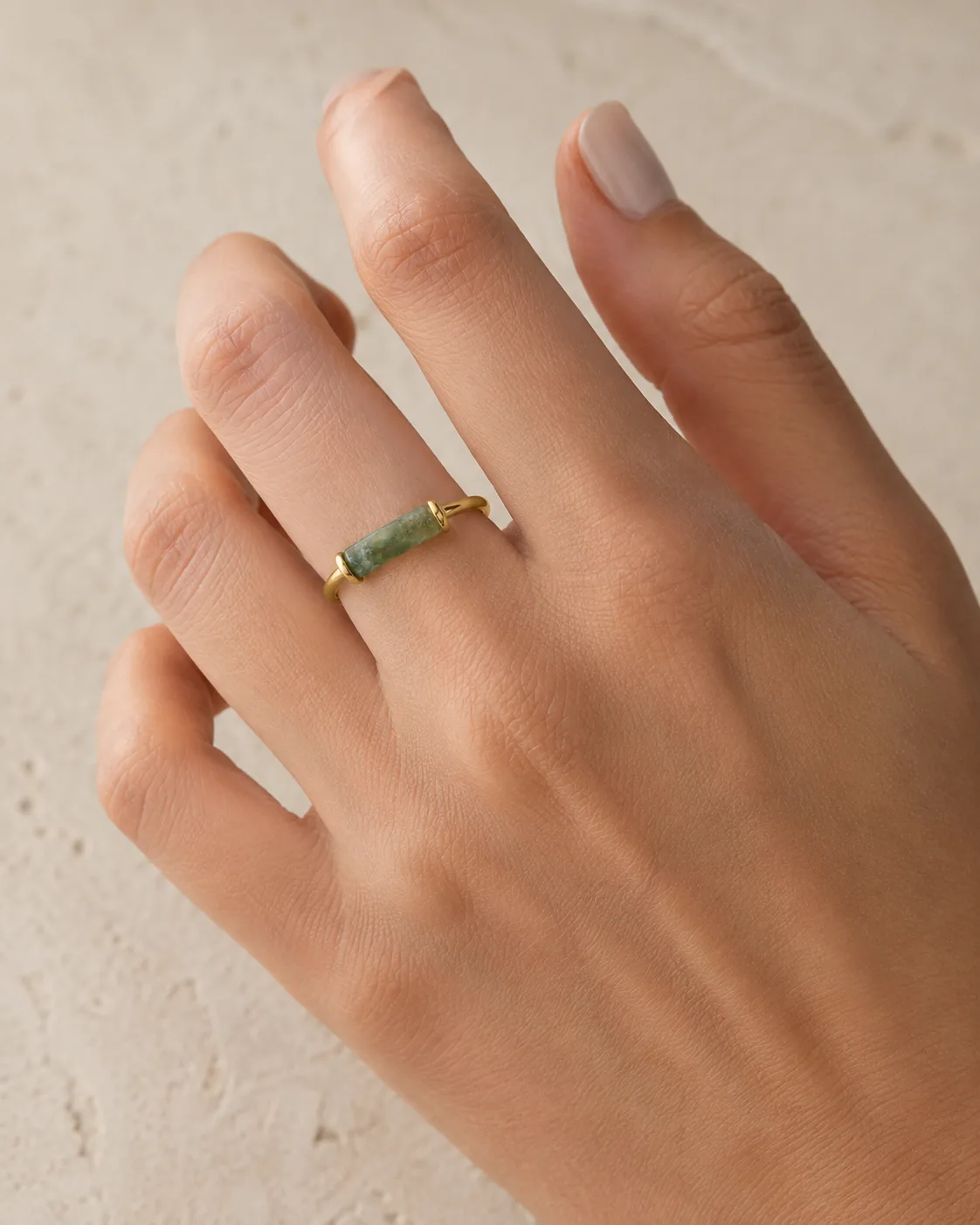
The original work
It was made to be worn, and it was. It survives with a softened surface, small losses and the weathering of centuries. Those marks are the evidence. They stay in view.
Annealed: cooled slowly in the kiln so that it would not crack. One step, taken by one workshop, two thousand years ago. It is the reason the piece is still here, and it is what this ring is named for.
The wearer
A cylinder of this kind reached the hand through the houses that commissioned painted walls, bronze mirrors and caskets of ivory. In the early Empire colour held in glass carried standing, and it was worn where standing is read: on the hand that offers, receives and gestures.
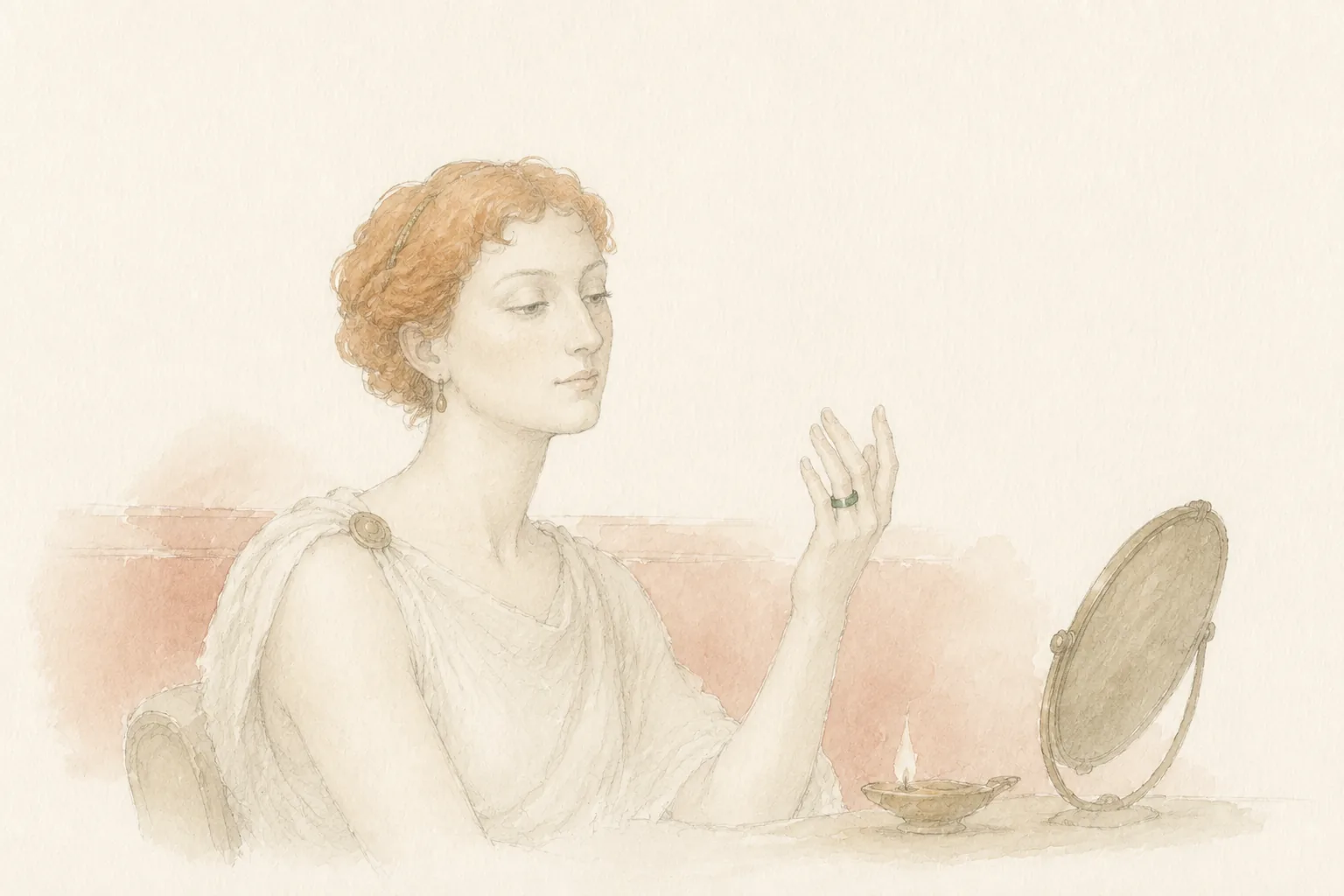
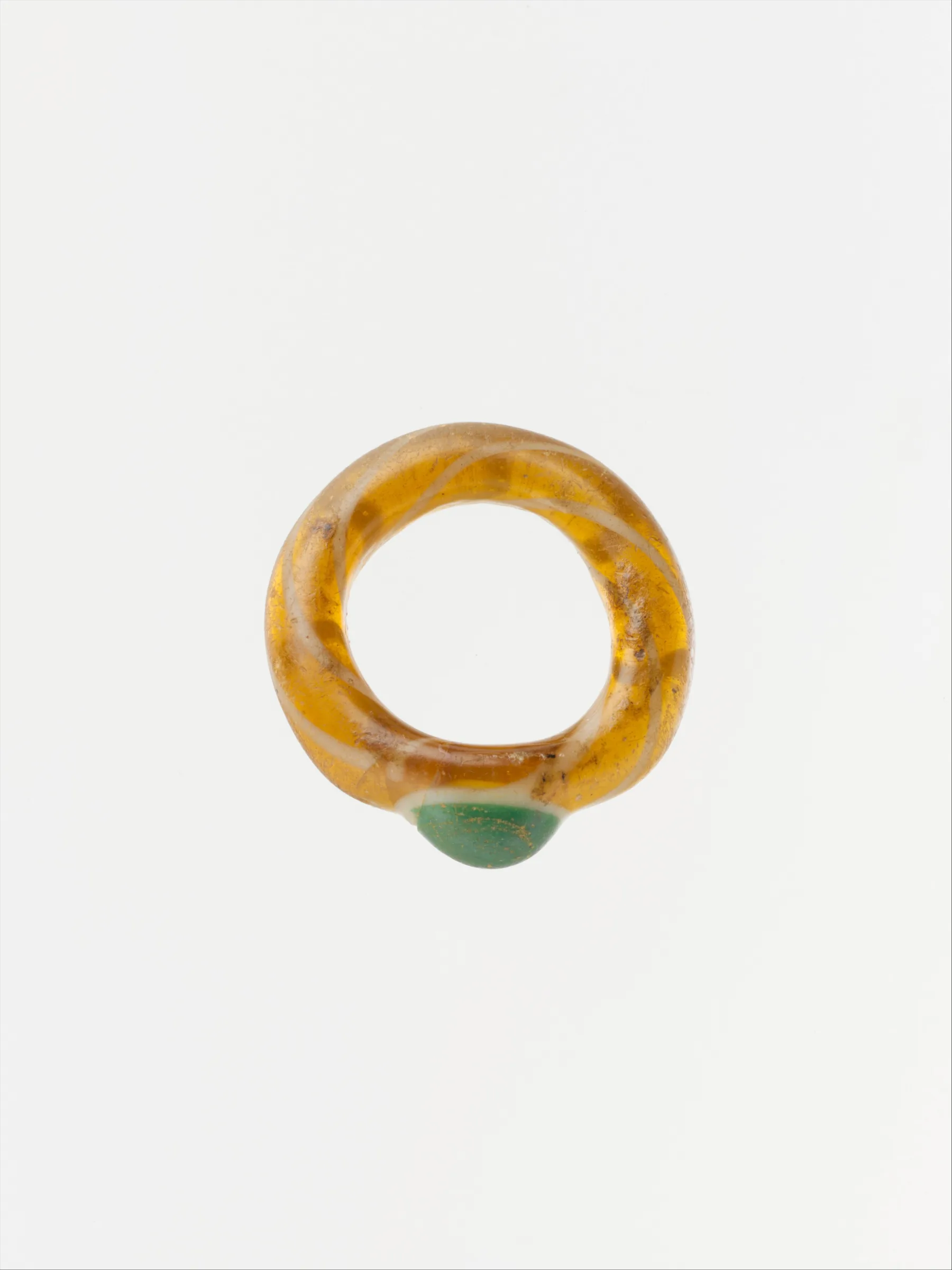
The Metropolitan Museum keeps a Roman glass finger ring of the same century, drawn, tooled and trailed in one operation, catalogued at 2.3 cm across. It entered New York with the Morgan glass in 1917 and it has stood in a vitrine since. The ring built here is the same object with somewhere else to go.
Read the museum record ↗The 1st century A.D.
A 1st century A.D. attribution spans Rome’s first two imperial dynasties. Emperors rose and fell, a civil war ran through a single year, a volcano buried two cities. The workshops kept working.
Augustus founded the first imperial house. Claudius began the harbour at Portus, tying imperial power to the sea routes that carried vitrum across the empire.
Galba, Otho, Vitellius and Vespasian followed one another through a single year of civil war.
The Colosseum opened under Titus. Vesuvius sealed Pompeii and Herculaneum into the archaeological record.
The Nerva–Antonine sequence opened and carried Rome into the 2nd century.
A work from the period
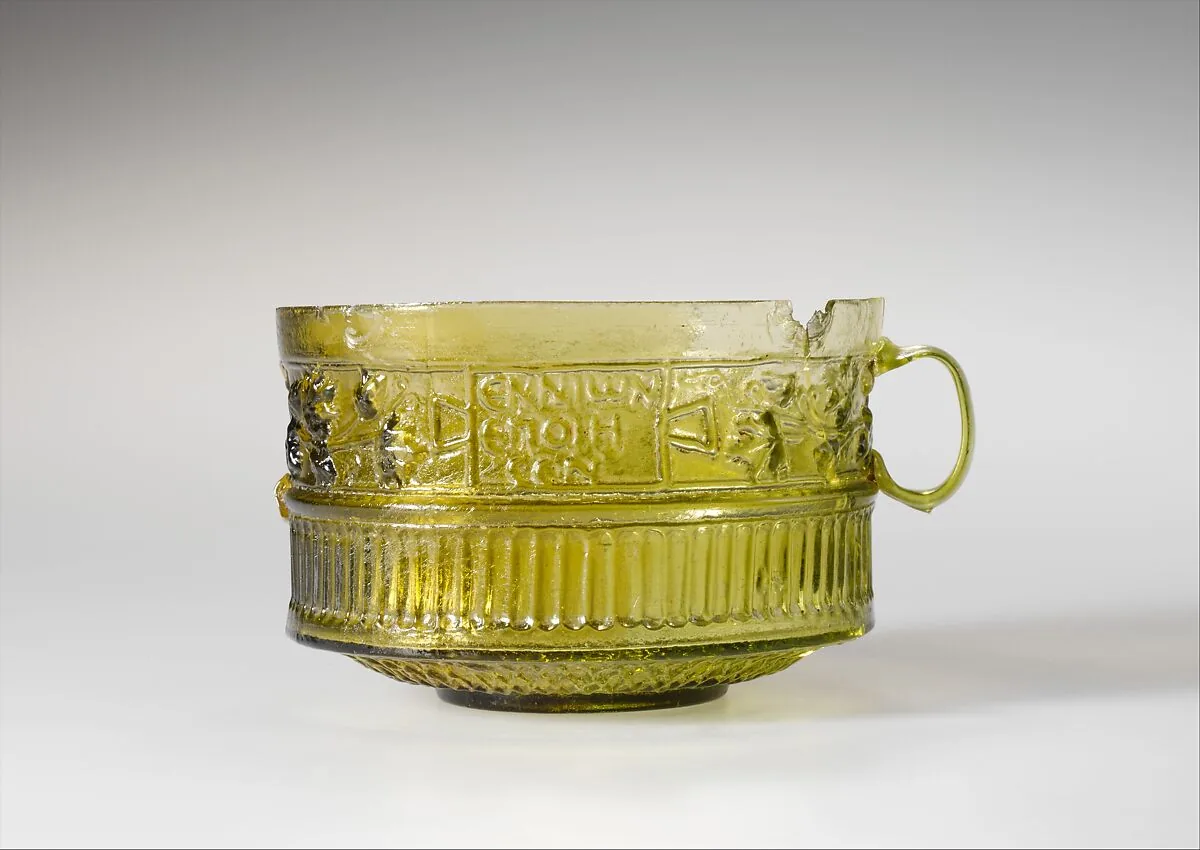
This cup was blown in a four-part mould during the Julio-Claudian period. Inscription, vine scrolls, columns and fluting came out of a single operation.
The technique appears in the first decades of the 1st century A.D. and crosses the empire within a generation. The Met’s cup is a dated anchor for the century. Our vitrum is dated on its own material, condition and provenance. Never on the museum’s.
Read the museum record ↗One sea
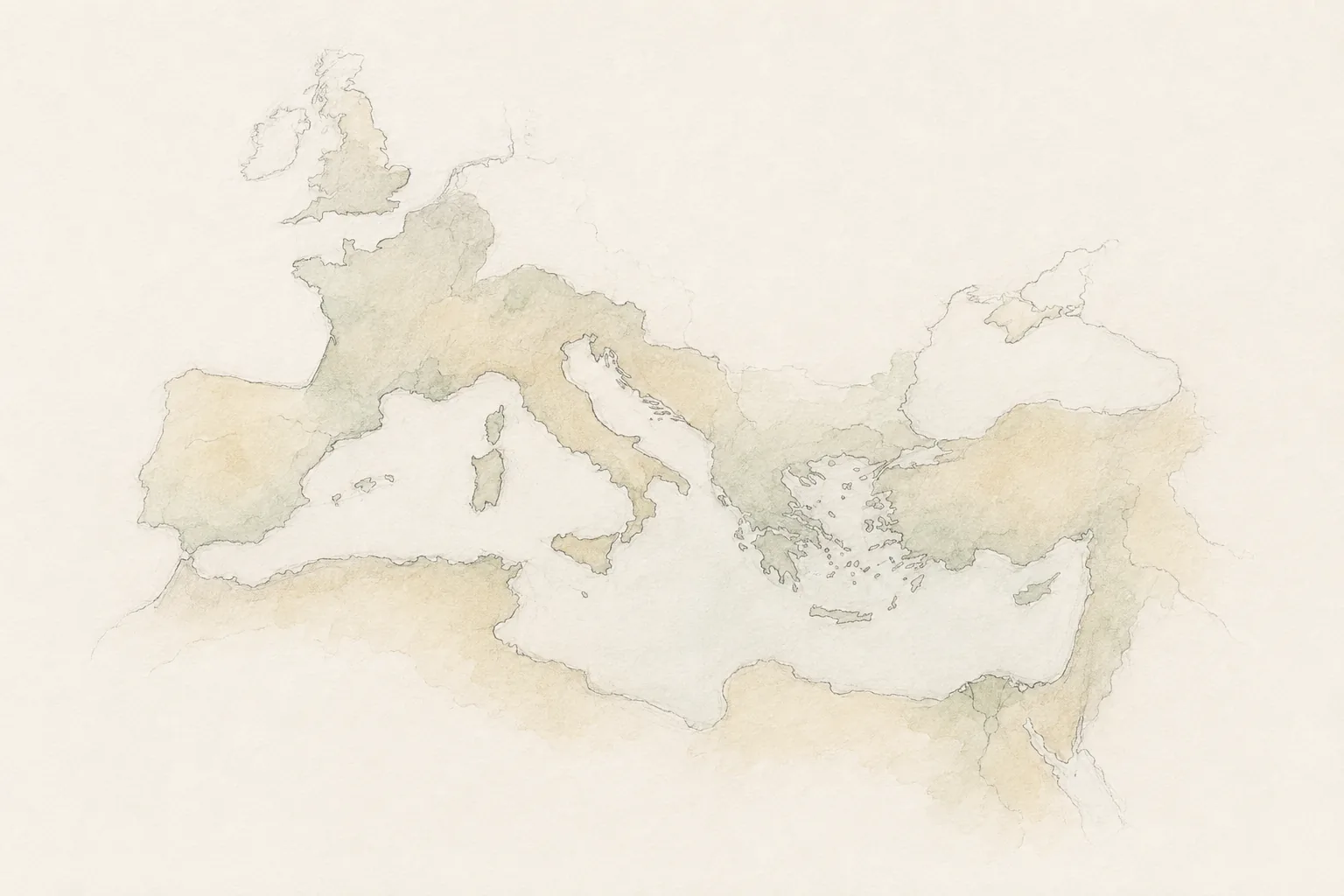
Roman vitrum belonged to a connected Mediterranean, from the eastern provinces to the western empire. The map gives the century its scale. It does not give this piece a birthplace, and we will not pretend otherwise.
Historical context · 1st century A.D.
The record
Each one is built around its own vitrum.
The Arrivals
Pieces are found one at a time, and only the intact ones are catalogued. Subscribers see each arrival first, with its record, its condition and its price.