Attention
To look at an old object without rushing to make it decorative, useful or certain before it has been properly seen.
 Atelier Numen
Atelier Numen · an inherited practice
Around 1855, someone in our family began to keep a private catalogue of old objects. At the same table, jewellery was made for the person closest to him. Nothing about it was meant for a market. That private way of paying attention is where this house begins.
Begin at the table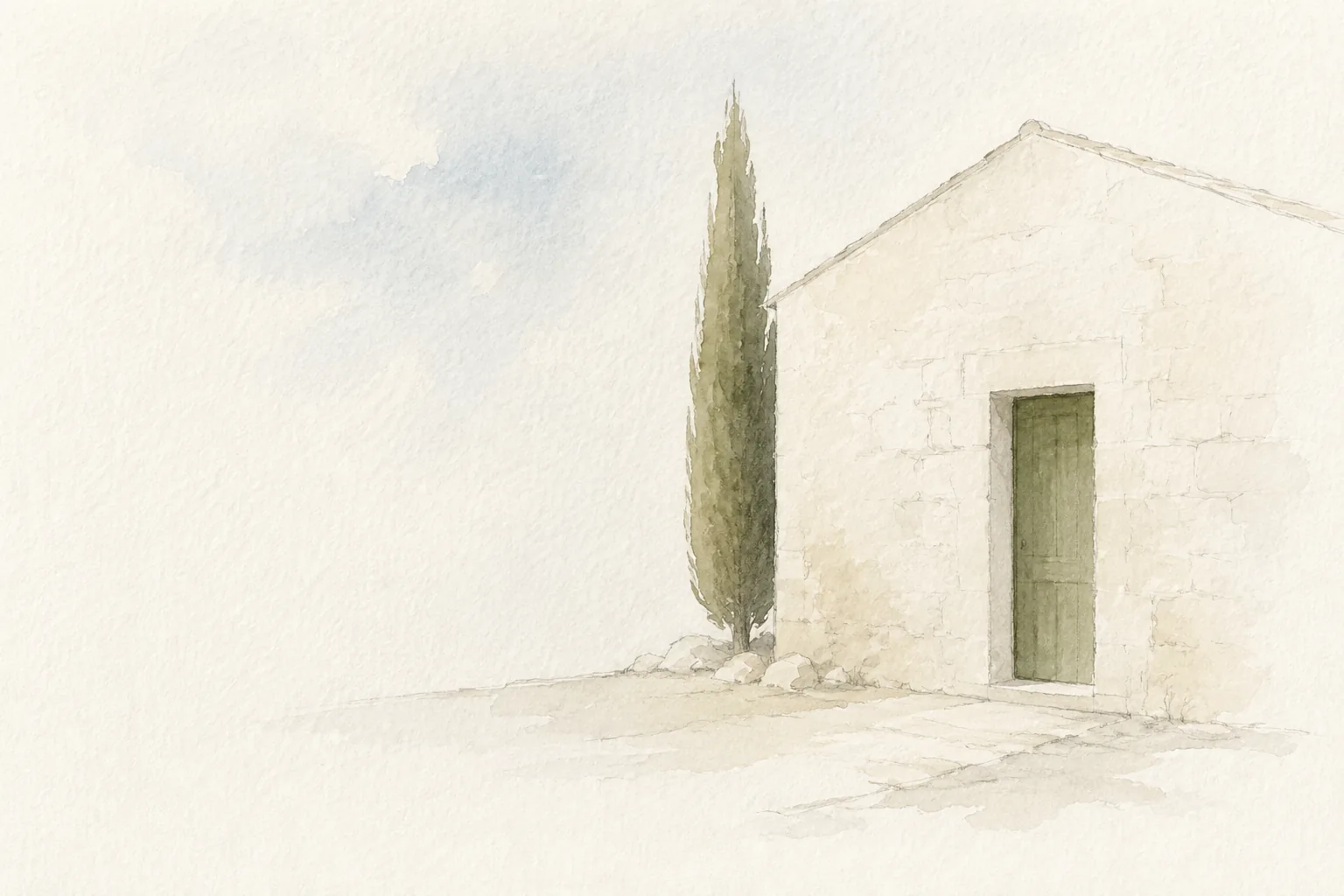
The beginning · c. 1855
Family recollection places the first catalogue there: not in an institution or a dealer’s stockroom, but in a domestic room where found objects were set down, examined and described. The notes were modest—material, condition, an idea of where something might have come from. The purpose was not to own a history. It was to notice one.
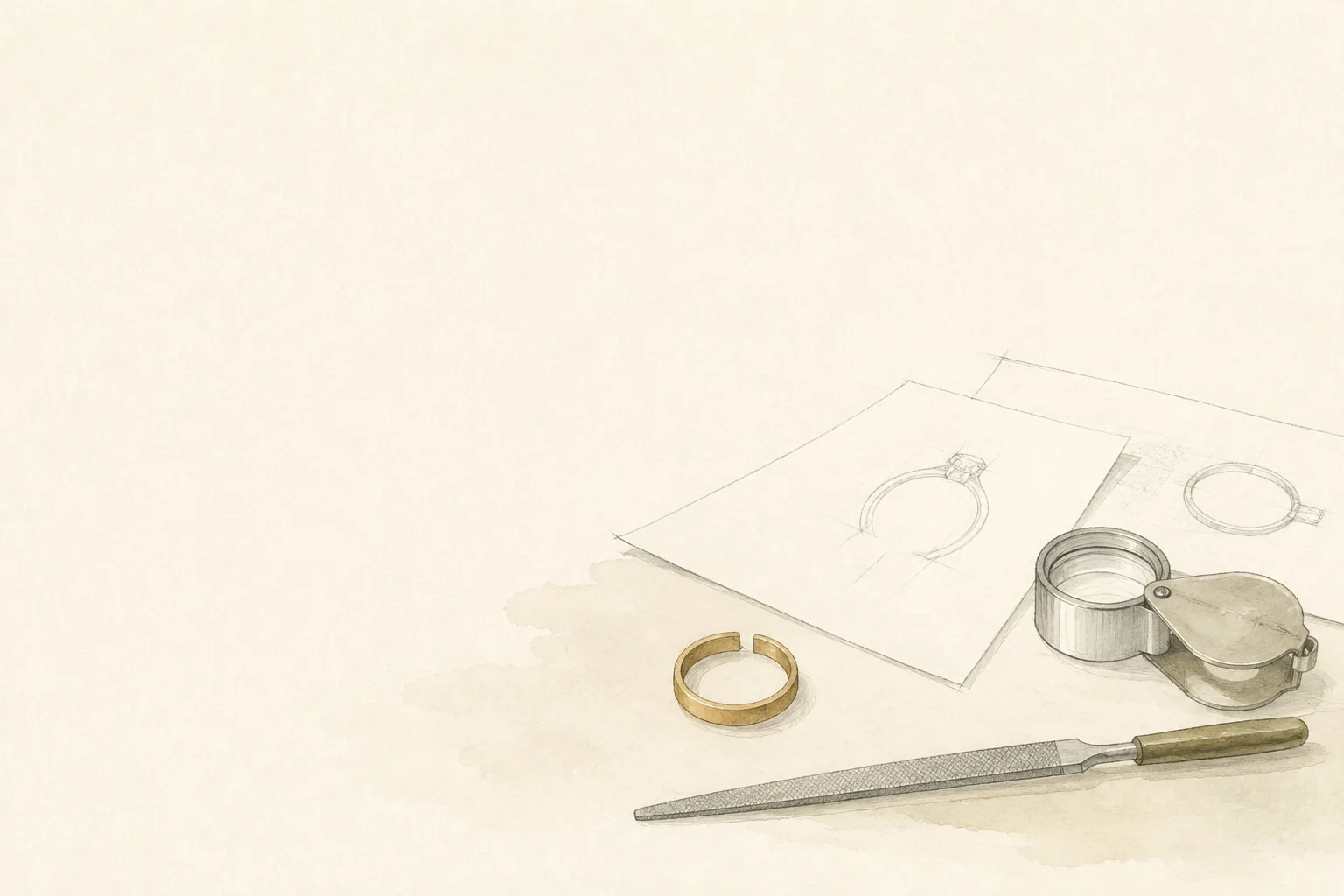
A private beginning
The same account remembers jewellery made for the founder’s wife: a small piece at a time, made because it could be made for her. We have almost no surviving records of those early works. What seems to have survived instead is the principle behind them: begin with a person, work slowly, and let the material keep its own character.
What the archive cannot say
This practice travelled through homes and hands, not through a formal company. There are years we cannot reconstruct, objects that were never photographed, and commissions known only by recollection. We do not use those silences to make the past grander than it was. They are a reason to be exact about what remains.
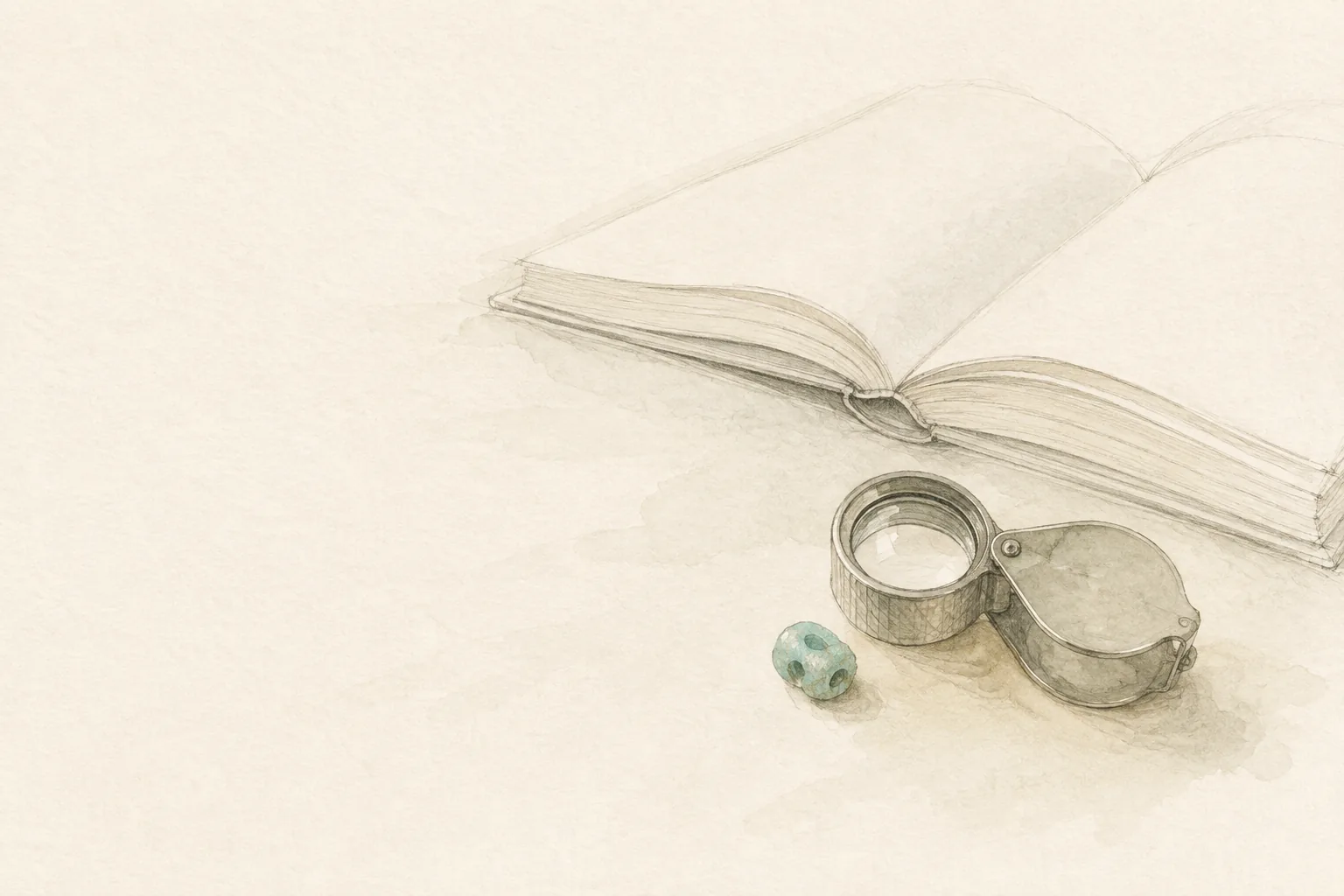
What was passed on
For generations, the work moved between private curiosity, gifts and occasional commissions. Its scale changed; its habits did not.
To look at an old object without rushing to make it decorative, useful or certain before it has been properly seen.
To make close to the wearer: for family, friends and, at times, someone who asked for a piece that could belong only to them.
To let the work speak softly. For a long time it stayed within a small circle—not as a strategy, simply as the way it was kept.
The marks of the house
These are contemporary house marks, not recovered archival seals. Together they give a visual rhythm to the story: the curiosity of the first catalogue, the quiet continuity of private work, and the openness of the atelier today.

A mark for the age of the private cabinet and the handwritten record.

A mark for work kept close: gifts, repairs and commissions made by hand.

The present sign of a practice made accessible beyond its original circle.
The hand remains
Atelier Numen retains the scale and care of the old workshop: research before decision, material handled slowly, and a finish considered at the bench. What changes now is the invitation. The work is no longer kept behind a private door.
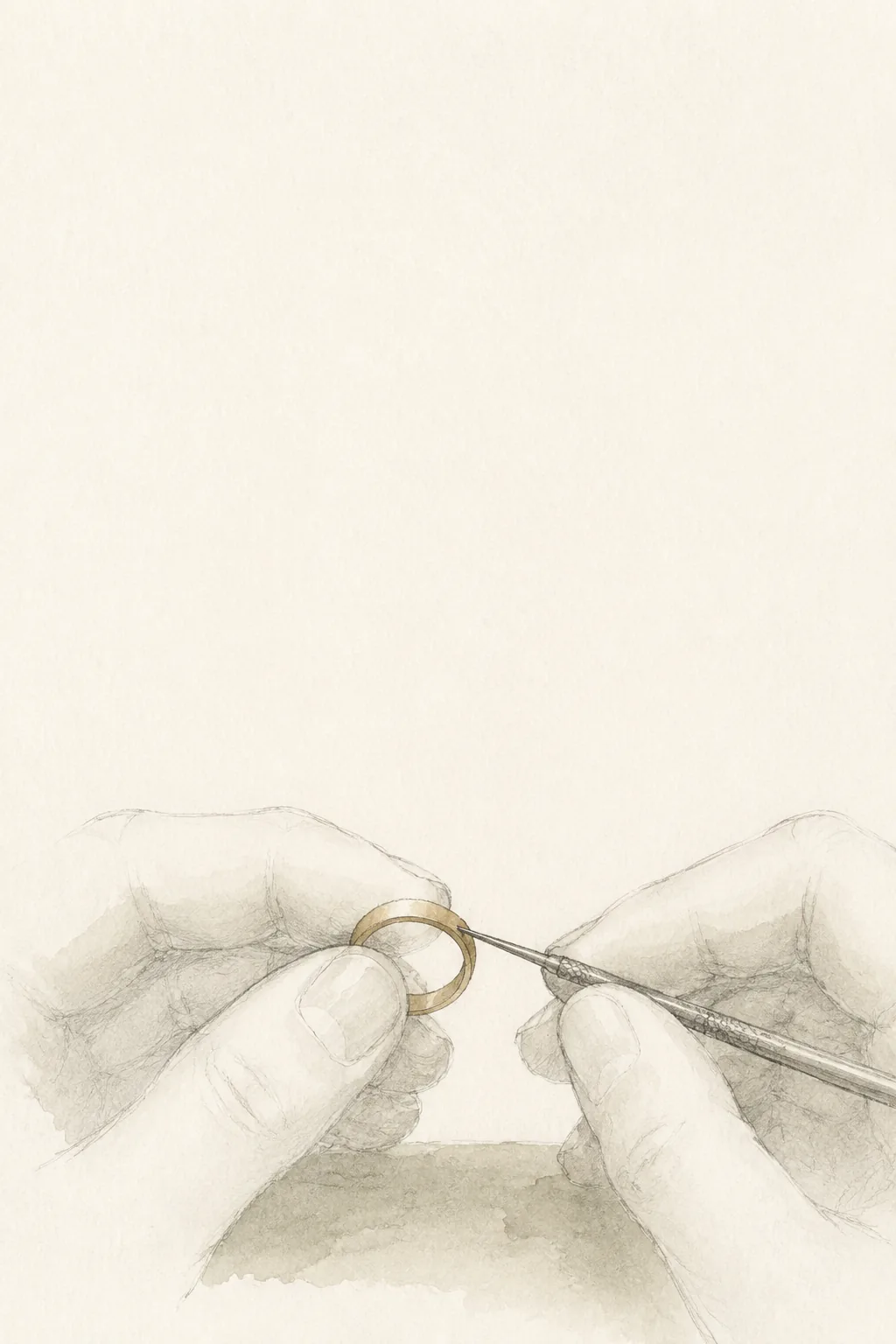
The House · now
Atelier Numen gives a public form to an old private habit: to seek out what has endured, to make with care, and to give an object a life close to someone. The past is not a claim to authority. It is a responsibility to continue well.
Explore the collectionThe Arrivals
The next object is already being examined.
The House works on one piece at a time. Subscribers read the record of each arrival first, with its condition and its price.
Recorded. The next arrival goes to this address before it reaches the catalogue.